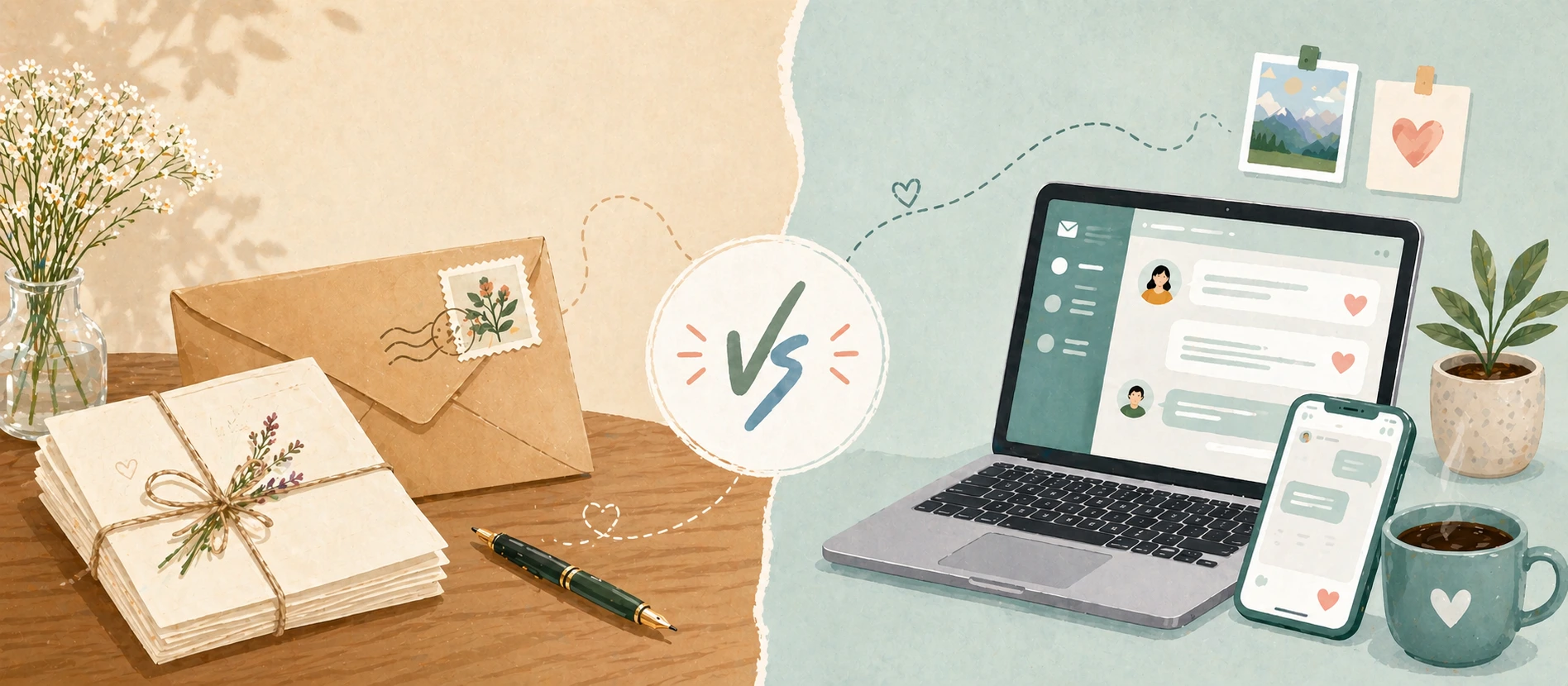
When starting a penpal friendship, one of the first decisions you'll make is how to send your letters. Traditional mail and digital messages both work well, but they offer very different experiences. Neither option is inherently better — the right choice depends on your goals, lifestyle, and what you want from the connection.
The Charm of Snail Mail
There is something special about finding a handwritten letter in your mailbox. Snail mail carries a personal quality that is difficult to replicate on a screen. The choice of stationery, the handwriting style, and even the stamps all add character to each exchange.
Physical letters also encourage slower, more thoughtful communication. You cannot easily edit or delete once the ink is on the page, so each word tends to be chosen with care. Many penpals enjoy tucking small extras into their envelopes, such as postcards, pressed flowers, tea bags, or small sketches.
However, snail mail has some practical downsides. International delivery can take anywhere from one to four weeks. Letters occasionally get lost in transit. You will also need to budget for postage, which can add up over time, especially for overseas correspondence.
The Convenience of Digital Letters
Digital penpal exchanges offer speed and reliability. A message sent today arrives within seconds, making it easier to maintain a steady rhythm of conversation. This can be especially valuable for language learners who benefit from frequent practice and quick feedback.
Digital correspondence also removes the cost of postage and the risk of letters disappearing in the mail. You can include photos, links to articles, or other media that would be difficult to share through physical mail.
The trade-off is that digital messages can feel less tangible. It is also easy to slip into a casual, chat-like tone rather than crafting a proper letter. If you choose digital, try treating each message as a real letter — with a greeting, a thoughtful body, and a warm closing — rather than a quick text.
Practical Things to Consider
- Pace: If you enjoy anticipation and do not mind waiting, snail mail is very rewarding. If you prefer regular, ongoing contact, digital may suit you better.
- Cost: Physical letters require stamps, envelopes, and stationery. Digital letters are essentially free beyond your internet connection.
- Your penpal's situation: Some people live in areas where mail delivery is unreliable. Others may have limited internet access. Being open about preferences early helps avoid mismatched expectations.
- Purpose: A language exchange often benefits from frequent digital messages, while a friendship focused on reflection and storytelling may thrive with physical letters.
You Can Use Both
Many penpals blend the two formats. You might send digital messages for quick check-ins and save physical letters for special occasions, seasonal updates, or longer reflections. Some penpals start digitally and transition to snail mail once trust has been established.
The most important thing is the connection itself. Whether your words travel by plane or by wire, what matters is that you keep writing and stay genuine with your penpal friend.